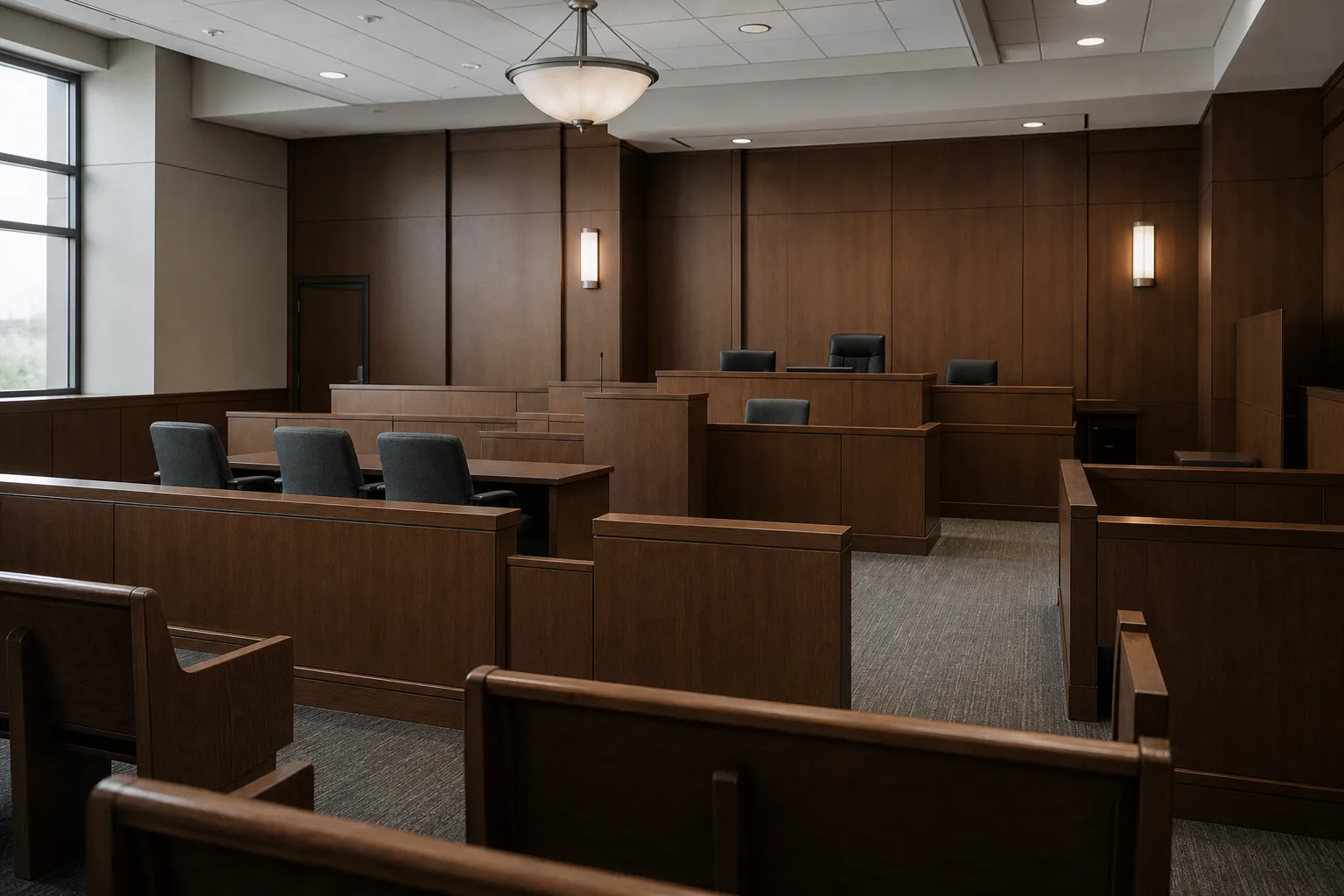
One driver's working-out of how infractions move through Washington district and municipal courts, including what a deferral costs, how a contested hearing actually runs, and where paid representation changes the outcome.
The paper handed to you at the roadside is a notice of infraction, and the part that matters most is not the alleged speed or the officer's badge number but the response window printed on it. In Washington, a driver has fifteen days from the date the notice is issued to tell the court something. Not to resolve the case, not to appear, just to respond. Everything that follows, including whether you ever see a courtroom and whether the ticket reaches your driving record, runs through that single deadline, and most of the expensive outcomes people describe later began with a missed one.
What the citation is actually asking you to do
A notice of infraction is not a criminal charge and it does not ask you to plead guilty or not guilty. It asks whether you admit the infraction was committed, and it gives you a place to say so, a place to ask for a hearing to explain, and a place to ask for a hearing to deny. The back of the form, or the insert stapled to it, tells you which district or municipal court has the case and how to reach it. Read the court name carefully, because Bellevue, Kirkland, Redmond and the King County district courts each run their own calendars with their own filing practices.
The dollar amount printed on the notice is the base penalty, not the total. Statutory assessments get added on top, and courts commonly quote a final figure that is noticeably higher than the number the officer wrote down. That gap surprises people who budgeted for the printed amount and then paid the counter clerk something larger. If you plan to simply pay and move on, call the court or check its online portal for the actual payable total first, so the decision you make is a decision about real money rather than the number you half-remember from the roadside.
The three boxes, and what each one gives up
Checking the box that admits the infraction ends the case immediately. You pay, the finding is entered, and the court reports it to the Washington State Department of Licensing, which maintains the abstract of driving record that insurers buy. That record, not the fine, is where the real cost usually sits, because a moving violation can follow your premium for years while the fine is a one-time hit. Asking for a mitigation hearing admits the same thing but keeps the door open to a reduced penalty or, in some courts, a deferred finding that keeps the violation off the abstract if you stay clean.
The third box, the contested hearing, denies that the infraction was committed and puts the burden on the city or state to prove it by a preponderance of the evidence. It costs you time: a hearing date months out, possibly a subpoena request for the officer, possibly a discovery request for the radar certification and calibration logs. It costs you nothing in additional penalties if you lose, since the court cannot punish you for contesting. What it can cost is the deferral you might otherwise have used, because some courts treat the request as a fork in the road rather than a step along one.
What silence costs, which is more than the fine
Return nothing and the court does not forget the ticket. After the window closes, the court enters a default finding that the infraction was committed, adds a late penalty, and reports a failure to respond to the Department of Licensing, which is the trigger for suspension of your driving privilege. The unpaid balance typically goes to a collection agency, which adds its own fee, and the suspension itself creates a second and much worse exposure: driving while license suspended in the third degree is a misdemeanor, a criminal charge with a criminal record attached. A fifteen-day lapse converts a civil penalty into something a background check will show.
Reinstating afterward is possible and routine, but it is not free and it is not fast. You pay the original penalty, the late fee, the collection fee, and a reissue fee to the state, and you wait for the paperwork to clear. Set against that, mailing the response form or filing it through the court's portal on day three is the cheapest action available anywhere in this process.
Where paid representation changes the arithmetic
Most drivers can request a hearing themselves; the form is short and the courts are used to self-represented parties. The question is narrower than whether you can do it. It is whether the likely insurance consequence of a finding, multiplied over the three to five years an insurer looks back, exceeds a flat fee, and whether you would rather not take a workday off to sit through a calendar call. For a commercial driver, a driver already carrying a recent violation, or anyone whose employment depends on a clean abstract, hiring a Traffic Lawyer in Bellevue usually costs less than one year of the rate increase it is meant to prevent.
Representation also buys familiarity with a specific courtroom. Deferral practice, prosecutor availability, and how a particular judge handles a missing officer vary from bench to bench across King County, and that local knowledge is most of what a fee actually purchases.
How the rest of this site is arranged
The sections that follow take each fork in turn: what mitigation, a contested hearing, and simply paying each give up; what actually happens in the room once your case is called; and what a deferral does to your record and your premium against what a flat fee buys. Read them in whatever order matches the box you are closest to checking.
Put the response in the mail or through the portal this week, then spend the months before the hearing date deciding how hard to fight it. The deadline is the only part of this you cannot get back.